

The Reactor
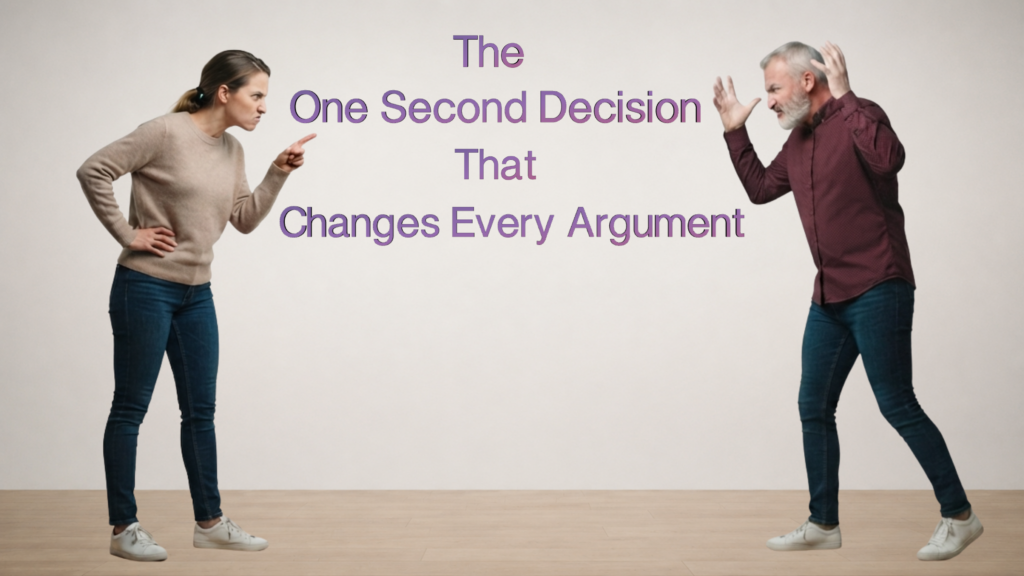
You react emotionally before you decide anything — and then you have to say it.
Why People React Emotionally
Something gets said, and you feel it right away. A twinge. Something’s not right — not right to you. Maybe it’s aimed at you, maybe it’s aimed at someone who isn’t going to speak up for themselves. Either way, you can’t let it pass.
So you say something. Now. Not after you’ve thought it over, not on the way home — right there, in the room, while it’s happening. Letting it go isn’t an option, because letting it go would mean the wrong thing just stands.
You’ve held your ground when it cost you. You’ve said the hard thing to the person who didn’t want to hear it. You’ve been willing to lose the peace — sometimes to lose the whole relationship — rather than sit quietly while something you believe is wrong goes unanswered.
And you’d do it again. That’s the part other people don’t always understand.
What’s actually happening
You have a sense of what’s fair. People who react emotionally often experience conviction before reflection. When something crosses it, you feel it before you can talk yourself out of it — and you’re not built to sit on that feeling. You say it.
That’s not a temper. It’s conviction. You’re the one person in the room willing to spend something real to defend what you believe is right — and most people aren’t. Most people feel the same wrongness you feel and swallow it to keep things smooth. You don’t. You put it on the table, and you’re willing to let it cost you.
The thing underneath — the thing you’re too close to see in the moment — is that you’re standing on your sense of what’s right as if it’s the one that settles it. Not their sense. Not the room’s. Yours. It feels like defending justice. From where you stand, it is justice. And that conviction is exactly why you’ll spend a relationship without flinching — because it doesn’t feel like a choice. It feels like the only honest thing to do.
You are willing to hurt a relationship in the name of what you believe is right.
Why Reacting Emotionally Feels Right in the Moment
A conviction you’re sure of doesn’t quiet down. When you react emotionally, your mind searches for evidence that your first reaction was correct. It looks for more reasons.
“This is wrong” is enough to act on. But “this is wrong because” is a case — and once you’re building the case, you keep finding evidence. Every piece makes you more certain, and the more certain you get, the less room there is for their side of it. You didn’t set out to escalate. You set out to be right about something that felt worth being right about, and being right kept asking for one more proof.
The Cost
The weight you carry is the aftermath — the conversations that cost more than you meant them to.
You win the point and lose the person. You defended what mattered, you were willing to, and you’d stand by the principle — but the relationship paid the bill, and some part of you keeps that ledger. The people you were right at. The rooms you were right in that you’re not welcome in anymore. Being right was real. It just turned out to be expensive, and you’re the one still holding the receipt.
You’ve been right about a lot of things. It’s the being-right that’s cost you the most.
Deciding to stop reacting emotionally doesn’t mean giving up your convictions. It means giving yourself enough space to decide whether this moment deserves them. You’re not doing anything small. You feel a wrong and you refuse to let it stand — for yourself, or for someone who couldn’t stand up for themselves. That’s not nothing. In a room full of people keeping the peace, you’re the one who won’t.
You’d just never quite noticed that the justice you were defending was always your own — and that everyone else in the room had a version too.