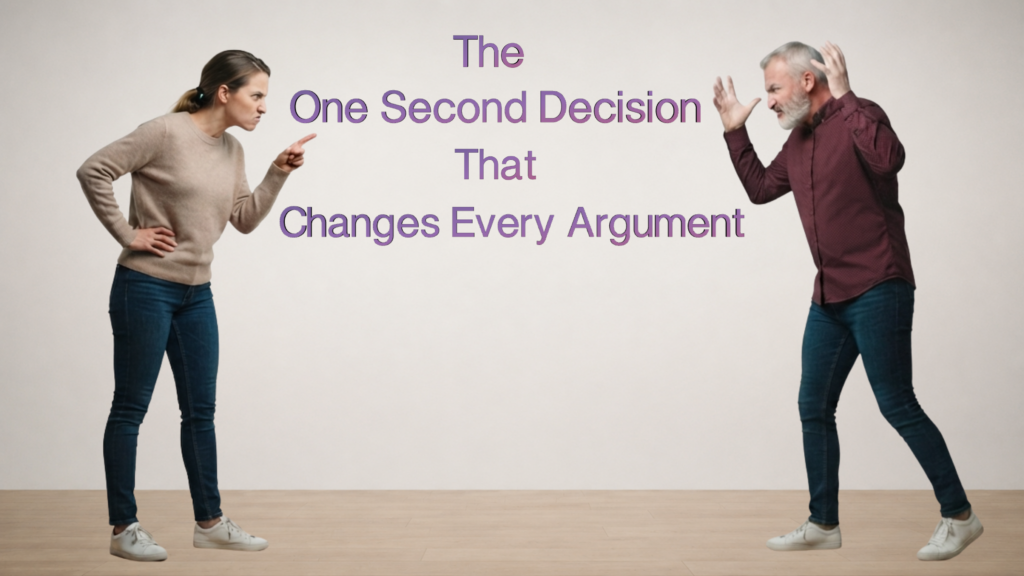


The Avoider
You’ve never lost an argument you didn’t have. when you avoid difficult conversations, you just pay for them another way.
What it looks like in the wild
“No, you’re right — I didn’t really think about that.”
You did think about it. You just handed it over.
You have an opinion and you keep it. The moment passes. It’s fine.
Somebody talks over your point and you let them have it. Not because they’re right. Because it isn’t worth it.
You agree faster than you believe. When you avoid difficult conversations, agreement becomes the fastest way to keep the room comfortable—even when it isn’t honest.
You’re the easy one to be around. Everybody knows it. That’s not an accident.
Afterward you all get beers and it’s good. It’s actually good. You’re laughing. Nobody stepped on anybody — that’s the story, and you believe it, mostly.
You’ve stopped bringing certain things up. You don’t remember deciding to.
Why You Avoid Conflict Even When You Have Something to Say
You’re not avoiding a fight. You’ve decided it isn’t worth having.
That’s the difference between you and someone who’s just scared. Scared is about you. This isn’t. You believe someone’s going to get hurt in there — them, you, doesn’t matter which — and you’ve decided the point isn’t worth what it costs to make it. So you don’t make it.
You take the loss on purpose. You hand over something you still hold, and the room gets easier, and nobody knows they were handed anything.
That’s not cowardice. Cowardice protects you. This costs you.
The only broken part is upstream of all of it. You believe you know how it would go. You’ve never run it.
You don’t know how it would go. You believe you know. That’s why you never find out.
Why Avoiding Difficult Conversations Becomes a Pattern
You built the other person out of your own uncertainty.
Maybe you don’t trust them to keep it civil. Maybe you don’t trust yourself to. Either way there’s a gap, and you filled it with someone — a tone, a comeback, a willingness to hurt you they have never actually shown you.
And sometimes you’re right. Turn over enough cards and you’ll get an ace. Say “this will go badly” enough times and some of them will, and each one lands like proof. A stopped clock is right twice a day. It isn’t keeping time.
You’ve been counting the hits. You never counted the swings.
The Cost
The conversations you never have.
The toll isn’t the point you gave up. It’s what giving it up does to you.
Say “you’re right” enough times without meaning it and something starts to give. You stop being sure. You hear your own position and it sounds thinner than it did. You told yourself a thing you didn’t believe, over and over, in the name of peace — and you’re not immune to being told. Nobody is. You talked yourself out of it.
Then it stops being about any one conversation. Everybody likes having you around. You’re easy, you’re fun, nobody has to brace for you. And nobody asks what you think, because you’ve taught them there’s nothing in there. Not on purpose. Just once per conversation, for years.
They like having you around. They just stopped believing you have an opinion.
That’s the toll, and you’ve been telling yourself it’s worth it because peace is worth it. Tolls don’t work like that. They add up. It doesn’t show up in that conversation — that one ended fine, everybody’s fine, you had beers. It shows up as being a little quieter than you used to be. As having fewer opinions than you used to have. As not being sure what you think about things you used to be sure about.
Your intention was right the whole time. You didn’t want anybody hurt, and you were willing to be the one who paid — most people aren’t. Most people just swing.
It’s only the math that’s off. You’ve been paying a toll to somebody who was never collecting.