
Part 2 of the Student Confidence Series

Student confidence is not always visible.
A Student can be capable—and still stay silent.
Confidence isn’t just built.
It has to be expressed.
We want students to be confident.
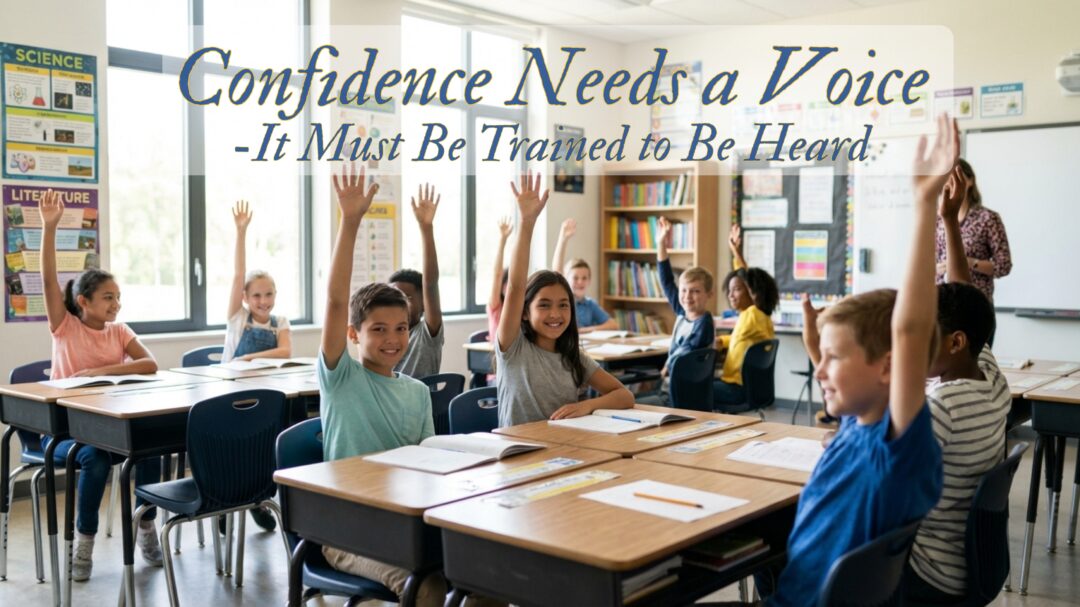
We want them to raise their hand.
Speak clearly.
Step forward.
Take ownership.
But many students don’t.
Not because they lack ability.
Not because they don’t understand.
But because speaking up carries risk.
The Missing Piece
Some students have the skills, and others are still developing it.
But the reason many won’t project.
Won’t lead.
Won’t step forward when it matters.
They don’t hold back because they don’t want to participate. They hold back because participation feels uncertain. What if I’m wrong, what if I look foolish?
The risk of being wrong—publicly and failing in front of others greatly outweighs the desire to participate.
So, they stay quiet.
What looks like a lack of student confidence is often uncertainty.
They need more than ability.
They need a structure where they know:
- mistakes are expected
- failure is an important part of the process that leads to success.
- and success is achievable and repeatable.
Because confidence isn’t complete until success is repeatable and failure is part of the process— until students are willing to be seen and choose to be heard.
A Student Who Made This Clear
Ellie’s story shows how student confidence can grow when structure makes participation feel safe and repeatable.

Ellie transferred to our school from Utah when she was ten years old.
Like many girls her age, she was extremely shy. She rarely spoke during class, and when she did, her voice was so soft you had to lean in just to hear her.
From a technical standpoint, she was well trained. Her previous studio had done a solid job. She had a strong stance, smooth transitions, and could deliver balanced kicks and punches. Within a few weeks, other students began looking to her for self-correction.
But something was missing.
Ellie had skill.
She didn’t have confidence.
During Q&A, she avoided speaking. When she did speak, her voice stayed small, and she tried not to take up space.
Where Leadership Begins
In our beginner/intermediate classes, every session followed a consistent structure:
Warm-up → Stretch routine → Skill work
The stretch routine was always the same.
Every class. No variation.
Six seated lower-body stretches.
Six standing stretches.
And this is where our studios leadership development started.
After warm-ups, I would select a student to stand at the front of the class and demonstrate.
I used the exact same language every time:
“Switch — front ball stretch.”
“Switch feet.”
Then the next stretch.
Every class. Same words. Same sequence.
At first, the student at the front would only demonstrate. I would call the commands.
Then, gradually, I would have them call the switches.
Eventually, they would lead the entire routine.
That simple routine became one of the first places student confidence could be practiced out loud.
Ellie Steps Forward
Ellie thrived in this role.
Standing at the front, she could see the entire class—students at different competency levels, all looking to her for direction.
She wasn’t just performing the stretch.
She was setting the standard.
But something else was happening.
She could see students struggling with positions she had already mastered. She recognized hesitation she once felt. And she could see the gap between where they were and where she now stood.
That mattered.
Because now, she wasn’t just following the structure.
She understood it.
Because the structure never changed, she didn’t have to guess what came next.
The sequence was familiar. The words were predictable. The timing became something she could trust.
The predictability removed doubt.
And something began to shift.
Her voice got stronger. Her posture changed, and slowly, her presence began to grow.
From Participation to Leadership
It didn’t take long before I could simply say:
“Ellie, take them through stretches.”
And step out of the room.
From the lobby, you could hear her.
Clear. Steady. Confident.
“Switch — front ball stretch.”
“Switch feet.”
Parents would look up—not at me—but toward the classroom.
Because inside, their children weren’t just participating.
They were being led.
And Ellie was leading them.
Standing at the front of the class—without hesitation, without prompting—guiding her peers with clarity and control.
No script in her hand.
No second-guessing.
Just structure… turned into confidence.
What She Became
Not every student is drawn to leadership.
Ellie was.
She became our lead cadet (student helper) and then an assistant instructor (paid instructor) before she was 15.
The Junior Pee Wee class—our highest-energy group, made up of 3–5 year olds—became her class.
I didn’t need to be in the room.
She would line them up.
Run the class.
Call out corrections.
Recognize strong performances.
She did it with the support of cadets older than she was—but there was no confusion about who was leading.
Ellie was in charge.
And if you stood in the lobby, you didn’t have to look inside to know it.
You could hear her.
Clear. Strong. Confident.
The same voice you once had to lean in to hear…
now leading an entire room.
The Realization
What happened to the quiet girl you had to lean in to hear?
She didn’t suddenly become confident.
She trained in a structure where success was predictable—
until confidence became automatic.
Structure Builds Expressed Student Confidence
Here are three ways structure helps build expressed student confidence.
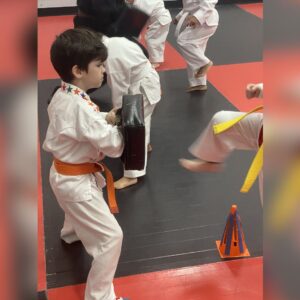
- Predictability Removes Hesitation
When students know exactly what comes next, they stop second-guessing.
They don’t have to wonder:
Am I doing this right?
What comes next?
What if I mess up?
They know.
And when hesitation disappears, participation increases.
- Repetition Builds Ownership
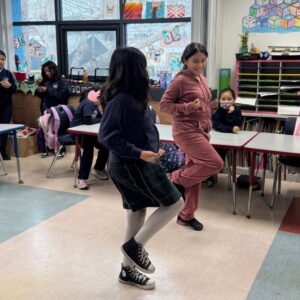
When students repeat the same sequence over time, something changes.
They stop following.
They start owning.
Patterns become familiar.
Transitions become predictable.
The structure becomes internal.
And once they own it—
they can lead it
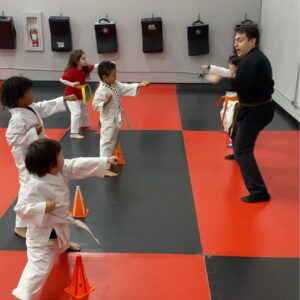
- Leadership Creates Identity
The moment a student stands in front of others, something shifts.
They are no longer just participating.
They are responsible for clarity, direction and the group.
And when that experience is repeated in a structured environment, it becomes part of who they are.
Not something they try to do.
Something they become.
What This Looks Like in a Classroom
This same structure applies far beyond karate school.
- Use consistent routines students can learn and predict
- Give students opportunities to lead parts of the process
- Keep language and sequencing consistent
- Let students demonstrate—not just participate
Confidence grows when students are not just included but entrusted.
The Takeaway
Confidence doesn’t just need to be built.
It needs to be expressed.
And expression requires structure.
Structure creates predictability.
Predictability builds ownership.
Ownership creates leadership.
And leadership gives the students confidence a voice.
Continue the
Confidence Series
Part 1: Confidence Isn’t Taught — It’s Trained
How structure builds real confidence through predictable success.

Part 3: Develop Confidence That Survives
The drill that exposes the difference between surface confidence and the real thing.