


 Few emotional experiences are as immediate and powerful as feeling targeted. A short email. A delayed reply. A clipped tone in a text. A passing comment that didn’t sit quite right. In seconds, the mind can build an entire narrative around a perception that may not even be true: They’re upset with me. I did something wrong. What happened?
But neuroscience and psychology consistently show something surprising: most interpersonal friction is not about us at all.
It is about stress, distraction, unresolved emotion, cognitive bias, or competing priorities occurring in someone else’s internal world that we may not completely understand.
Yet the human brain is wired to personalize communication and make it “all about me.” The real issue isn’t emotion; it’s misinterpretation.
When we mislabel intent, we pay for it emotionally.
Mastering discernment in communication does not dull our emotions; it refines them, giving us clarity instead of chaos and peace instead of reactivity. We could all use a little more of that.
Why the Brain Defaults to Self-Reference
The brain is a meaning-making machine. When information is incomplete in any given interaction, it fills in gaps automatically with material it has on file. Research in cognitive psychology shows that humans rely heavily on egocentric bias: the tendency to interpret events primarily through our own perspective (Ross & Ward, 1996).
This bias is not selfishness. It is neurological efficiency.
From an evolutionary standpoint, the brain learned to prioritize personal relevance for survival. If something in the environment changed, it mattered whether it affected you directly.
That wiring remains, even in modern social settings. While this mechanism once supported survival, it can become counterproductive in complex interpersonal relationships if we do not learn how to regulate it.
Neuroscientist Antonio Damasio explains that emotion and self-reference are deeply linked because the brain continuously monitors experiences based on how they impact personal safety, identity, and belonging (Damasio, 1994).
In doing so, the brain also relies heavily on past experiences to interpret new situations. These prior experiences, whether positive or negative, become cognitive shortcuts for prediction, even when the current context does not truly match the past.
For example, a previous relationship that ended due to a partner’s emotional withdrawal may cause someone to interpret any future communication difficulty as a sign of impending loss. Yet a current partner struggling to express stress may not be following the same trajectory at all.
So, when a coworker seems distant, a partner sounds irritated, or a message lacks warmth, the brain automatically asks: “What does this mean about me?” Instead of: “What might be happening in their internal world?”
This automatic framing occurs before conscious reasoning has a chance to intervene and often leads to hiccups and breakdowns in relationships.
Common Examples of Misinterpreted Intent
We’ve all been there…the terse tone in a text message, the “left on read” response that never came. But how often have we taken the time to truly try to dive into WHY these responses came our way? Was it an accident? Were they in the middle of something that required their full attention.
Here are a few examples of how day-to-day communication can go wildly wrong in the matter of a few moments and what might actually be going on behind the scenes:
- The Short Message
A colleague sends:
“Okay.”
The mind fills in tone, mood, and judgment.
In reality, the sender may be busy, distracted, tired, or multitasking.
- The Delayed Response
A friend does not reply for hours or days.
The narrative becomes: I upset them. I’m being ignored.
Yet research on digital communication shows that delayed responses are far more correlated with task load and cognitive fatigue than with relational intent (Kushlev & Dunn, 2015).
- The Neutral Facial Expression
Humans frequently misinterpret neutral faces as negative. Studies in affective neuroscience show that people often project emotion onto ambiguous expressions, especially when already emotionally primed (Bar et al., 2006).
- The Abrupt Tone
Stress, hunger, cognitive overload, or environmental pressure can alter tone without any relational meaning attached.
In each case, the brain assumes targeting even when none exists.
While personalization may feel protective, it is emotionally expensive and can cause irreparable damage over time if not addressed.
Research links chronic personalization to:
Increased anxiety (Beck, 1976)
Heightened interpersonal conflict
Emotional exhaustion
Defensive communication patterns
Reduced trust and openness
Persistent rumination
When we assume events are about us, we activate the threat system in the brain. The amygdala becomes more reactive, narrowing perception and amplifying emotional response (LeDoux, 2000).
This leads to:
Over-explaining
Over-defending
Emotional withdrawal
Escalation of minor issues
Misplaced guilt or resentment
Most importantly, personalization removes choice. Once the brain labels an interaction as personal, the emotional response feels justified and automatic.
But the label itself is often inaccurate.
How Recognition Interrupts the Personalization Loop
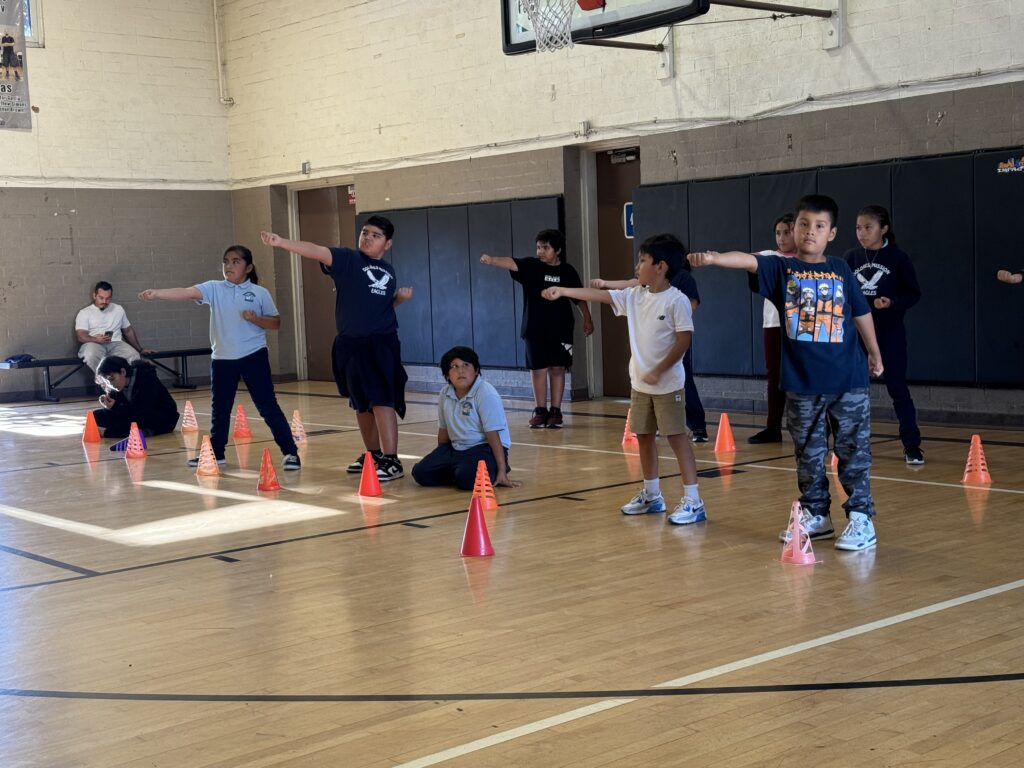
 In martial arts, we are trained to assess before reacting. Not every movement is an attack. Not every shift in stance is a threat. If you react to every motion as danger, you exhaust yourself and escalate situations that never required escalation in the first place. The same discipline applies in communication.
Just as in training, the most powerful emotional skill you can possess is not suppression; it is recognition.
Recognition simply means: “This may not be about me.” That single cognitive reframe immediately reduces emotional charge.
Neuroscience shows that labeling and re-framing experiences engages the prefrontal cortex, which regulates emotional reactivity in the limbic system (Lieberman et al., 2007). In simple terms: recognition restores choice.
It does not deny emotion but rather, it organizes it.
Instead of reacting, we pause. Instead of assuming, we inquire. Instead of defending, we observe.
This interruption creates space: space to respond intentionally instead of reacting impulsively.
But there’s a crucial distinction we need to make here: you can feel emotion without claiming responsibility for its cause.
Empathy does not require personalization. Compassion does not require self-blame. Understanding someone else’s emotional state does not mean you created it. (If you need to, repeat this in your head because I know a lot of us do.)
When we separate awareness from ownership, relationships become lighter. We stop carrying weight that was never ours.
It’s also no secret that when we react simply upon our visceral reactions, that stress often becomes a factor. Stress is not only caused by the actual events, though – it is also often caused simply by these misinterpretations.
Cognitive appraisal theory explains that emotional response depends more on how we interpret an event than the event itself (Lazarus & Folkman, 1984). This is why recognition is so important.
When we stop assuming personal targeting, stress decreases because:
Threat perception drops
Cognitive clarity increases
Emotional intensity softens
Communication becomes neutral again
This is why people often feel immediate relief simply by realizing: “This wasn’t actually about me.”
Why This Matters for Emotional Intelligence
Emotional intelligence is not about emotional control — it is about emotional accuracy.
Accuracy prevents unnecessary suffering.
When we personalize less:
Relationships stabilize
Communication improves
Emotional energy is preserved
Conflict decreases
Self-trust increases
We stop carrying emotional weight that was never ours to hold.

Recognition is not about avoidance. Sometimes feedback, boundaries, or conflict truly do involve us. But the difference is clarity.
Instead of assuming, we confirm. Instead of reacting, we ask. Instead of internalizing, we engage.
This transforms conflict into information instead of a threat. And that can turn stress and escalation into de-escalation and calm communication.
Remember…most conflicts are not about us.
They are about:
Someone else’s stress
Someone else’s fear
Someone else’s history
Someone else’s cognitive load
Someone else’s unresolved emotion
The moment we recognize this, emotional freedom begins.
Not because we stop caring, but because we start seeing clearly.
References
Bar, M., Neta, M., & Linz, H. (2006). Very first impressions. Emotion, 6(2), 269–278.
https://doi.org/10.1037/1528-3542.6.2.269
Beck, A. T. (1976). Cognitive therapy and the emotional disorders. International Universities Press.
Damasio, A. R. (1994). Descartes’ error: Emotion, reason, and the human brain. Putnam.
Heider, F. (1958). The psychology of interpersonal relations. Wiley.
Kushlev, K., & Dunn, E. W. (2015). Checking email less frequently reduces stress. Computers in Human Behavior, 43, 220–228.
https://doi.org/10.1016/j.chb.2014.11.005
Lazarus, R. S., & Folkman, S. (1984). Stress, appraisal, and coping. Springer.
LeDoux, J. E. (2000). Emotion circuits in the brain. Annual Review of Neuroscience, 23, 155–184.
https://doi.org/10.1146/annurev.neuro.23.1.155
Lieberman, M. D., Eisenberger, N. I., Crockett, M. J., Tom, S. M., Pfeifer, J. H., & Way, B. M. (2007). Putting feelings into words. Psychological Science, 18(5), 421–428.
https://doi.org/10.1111/j.1467-9280.2007.01916.x
Ross, L., & Ward, A. (1996). Naive realism in everyday life. In T. Brown et al. (Eds.), Values and knowledge (pp. 103–135). Lawrence Erlbaum.