


The Drill That Puts Confidence to the Test
Part 3 of the Confidence Series
 Confidence Is Not Fixed
We talk about confidence as if it is permanent—something you either have or you don’t. But confidence is not fixed. It moves. It grows. It erodes. It responds to the environment around it.
Confidence is built through competence, and competence is built through structured repetition. But here is what is often missed: confidence can disappear just as quickly when that structure changes.
The Eroding Confidence Drill
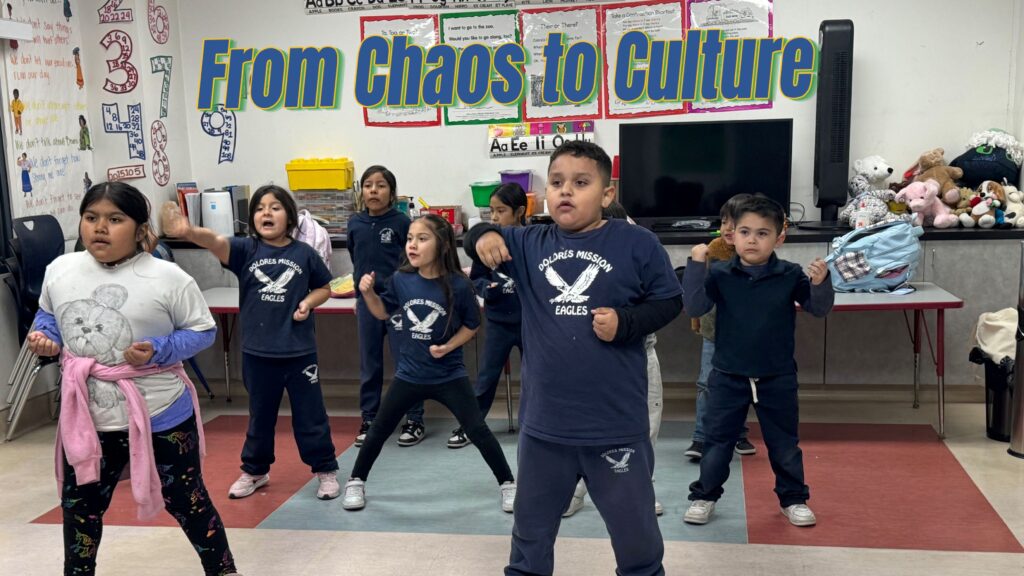
I have used what I call the “Eroding Confidence Drill” for years to help students understand how confidence works and how quickly it can shift. In one lesson, I used it with a group of 35 children between the ages of 7 and 11.
We began with a simple movement sequence performed at a slow speed. I demonstrated the move, and the students followed step by step for three repetitions. When we finished, I complimented them. “Good. That looked strong.” Then I asked for a volunteer to demonstrate for the group with me. Seven hands went up, roughly 25 percent of the class.
The volunteer and I repeated the drill together while the rest of the class watched. When we finished, I increased the praise. “Wow, this might be the best I’ve ever seen.” Then I asked again, “Who would like to volunteer?” This time, almost every hand in the room went up. Only three students kept their hands down, and not coincidentally, they were all new to the class.
At that point, I was looking for full buy-in, so from all the raised hands I chose one of the youngest newer students to come up and demonstrate with me. Again, we completed the three repetitions together. Again, the performance was successful. I said, “This is amazing. That was flawless. Give our volunteer a round of applause—that was a great set.” Then I added, “We have time for only one or two more volunteers.”
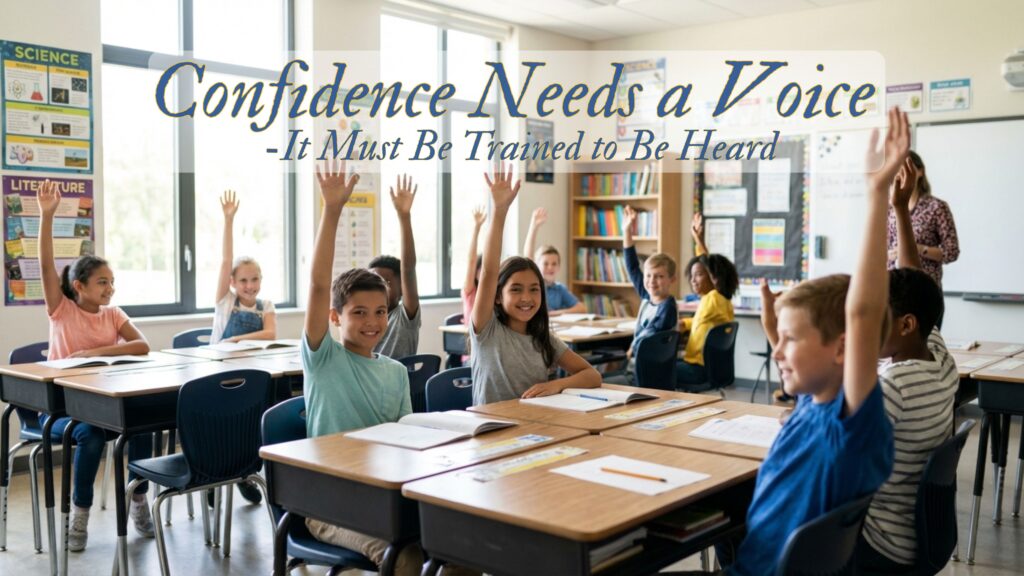
Now the room has changed. Not only did every hand go up, but you know how when someone is really sure, they seem to get an extra four or five inches of stretch in their arm? That was the class I was now looking at. Everyone was undeniably excited to be singled out and praised in front of the group.
Confidence was visible.
After several successful repetitions, the class reached a point of certainty. They knew they could do it. Not hoped. Not guessed. Knew.
When the Structure Changes
That was when I called on Rebecca.
Rebecca was one of the most advanced students in the class. She was eleven years old and had been training with me since she was three. She stepped forward and joined me at the front of the room, just like the others had. The class was watching. Rebecca was now the focus.
Then I changed two things.
“You will do this on your own,” I told her. “Same drill—but faster.”
She performed well, but not perfectly. I pointed out a small mistake in her footwork. Then I pushed further.
“Are you ready, Rebecca?”
She nodded.
“Do it even faster.”
Her second attempt was done at a speed that made control difficult. I gave her one small compliment— “That was faster”—and followed it immediately with a correction: “Your footwork and targeting lacked accuracy.”
Then I asked, “Can you go faster?”
She gave me a grin. “Sure.”
On her next repetition, the drill broke down completely. The movement was no longer recognizable.
I looked at her and said, “That wasn’t very good at all.”
Then I turned to the class.
“Who wants to go next?”
No hands went up.
What Just Happened
Moments before, every student wanted to come to the front. Every student was sure. But now the structure had changed. The task was no longer predictable. The standard of success had shifted.
Nothing has changed about the students. Only the structure changed.
What looked like confidence was actually certainty. And that certainty had been created by structure.
Why Rebecca’s Confidence Didn’t Waiver
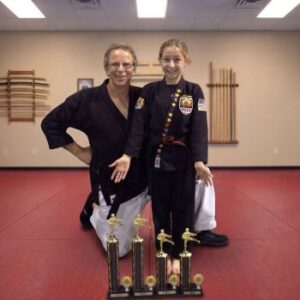 To soften the moment for Rebecca—and to reinforce her already solid confidence—I said, “You know I set you up, right?”
Her response became one of the most important parts of the lesson for me as a teacher.
“I knew you were going to make it impossible!”
That response didn’t come from personality.
It came from experience.
For eight years, Rebecca had trained inside a structured system where success was built step by step—and failure was not avoided but expected. She had been corrected, challenged, and pushed beyond her limits hundreds of times. Not randomly, but within a system she trusted.
So, when this drill broke down in front of the class, it didn’t shake her because she recognized it.
This wasn’t failure to her. It was part of the process.
Her confidence wasn’t surface level. It had depth. It had roots. It had been built in a structure where both success and failure were predictable outcomes.
She didn’t need the outcome to protect her confidence. She trusted the system.
The Real Lesson
This is where the difference becomes clear.
Confidence that depends on success is fragile. But confidence that is built through structure—through repeated success and repeated, supported failure—develops deep roots.
Confidence is not a trait. It is a response.
When students believe they can succeed, they step forward. When they are unsure, they hesitate. When they expect failure without support, they withdraw.
But when students experience failure as part of the process—something they recognize, understand, and recover from—their confidence holds, even when the outcome does not go their way.
Why This Matters in a Classroom
Students do not just respond to content. They respond to conditions.
If the structure is clear, repeatable, and allows for success, confidence builds. If the structure changes too quickly, removes predictability, or exposes students to failure without support, confidence erodes.
But when failure is built into the structure—when it is expected, understood, and experienced as part of progress—confidence develops depth. It becomes stable. It holds under pressure.
The teacher’s role is not just to teach skills. It is to control the conditions in which confidence is formed.
Because confidence is not built once. It is built moment by moment, based on what students believe is possible.
The Takeaway
Confidence can be created, and it can be lost. The goal is not simply to build confidence
but to build it in a way that endures.
That happens through structure. Through repetition. Through environments where success is predictable, and failure is part of the process.
Because when students trust the process, they don’t just participate. They perform.
The same system that built Nathan’s confidence…
and gave Ellie a voice…
is what allowed Rebecca’s to be unshakable.
Continue the Confidence Series
Part 1: Confidence Isn’t Taught — It’s Trained
Where confidence actually begins—and why most systems get it wrong.

Part 2: Confidence Needs a Voice — It Must Be Trained to Be Heard
How structure turns confidence into action, leadership, and expression.
NEXT STEP (FREE CURRICULUM ACCESS)
👉 Bring Structured Movement Into Your Classroom—For Free
The complete BTA system is designed to support educators by delivering structured, easy-to-implement movement that fits seamlessly into your day.
Built on a simple philosophy:
Access to all.
This curriculum helps you meet students where they are—cognitively and physically—while providing a clear, repeatable framework that builds confidence, coordination, and engagement.
Includes all 4 FIT Programs, helping you:
• Integrate movement without extra prep or equipment
• Support focus, behavior, and readiness to learn
• Provide structured, skill-based physical activity
• Create opportunities for student growth and leadership
Free access made possible through nonprofit funding—access available at BTATeam.org.