

One of the unique advantages martial arts instructors have is this: we are always training our replacement.
The proving ground for that training, in my studios, was the JR Pee Wee class — three to five-year-olds. Fifteen to twenty high-energy, completely unfocused little jumping beans.
The mat would slowly fill as class time approached. Shoes off. Parents hovering. Friends spotting each other across the room. The energy would rise in waves. By the time the clock hit the top of the hour, the room wasn’t calm — it was electric.
And then it was my job to turn that electric chaos into focused movement.
How?
Routine.
Reward.
Rhythm.
Structure.
And one very loud:
“LINE UP!”
Suddenly the chaos had direction. It became a race. Who could get to ready position first? The fastest earned a quick, “Wow, that was fast!” Sometimes I would lean toward another student and say, just loud enough, “Did you see how fast that was?”
The routine became a game.
The game became a ritual.
The ritual became safety.
You don’t eliminate the chaos. You channel it.
But here’s what I don’t want you to miss.
That structure wasn’t just for the students. It was built into the entire class from the opening line-up to the drills and to the performance shout-outs at the end. And woven into that structure was leadership development.
Our newest cadet instructors were assigned to assist in that class. At first, they stood beside me. Then I would step back, just slightly, giving them the reins for a portion of the class. I could see when things began drifting toward the guardrails, and I would step in to steady the room. Over time, the cadet would take more responsibility until they could run the entire class themselves. Learning how to run the group through consistent, repeatable principles.
Something interesting would happen when a new cadet entered the picture. The former “new guy” would reluctantly surrender the class back to me so we could begin the process again. Because once you’ve learned how to direct jumping-bean energy, it’s hard to let it go. But you now had the tools to run almost any class.
That’s the real lesson.
Structured movement doesn’t just organize students. It develops leaders.
Expect Chaos — It’s Energy Looking for Direction
When you introduce structured movement into a classroom, community center, academy, or home setting, the first thing that happens is not calm.
Energy rises before it regulates.
New routines create a brief period of adjustment. Students test boundaries. They watch each other. They look for cues about how seriously to take this new activity. Early resistance is often mistaken for rejection. It usually isn’t. It’s calibration.
Most teachers aren’t afraid of chaos. They’re cautious about disruption.
You’re thinking:
Will I get them back?
Will this spill into the next lesson?
Is this going to cost me more time than it’s worth?
Those are practical concerns.
Here’s what experience has shown me:
If the movement feels optional, students treat it as optional.
If it feels like an interruption, they respond casually.
If it feels structured, they respond structurally.
The energy in the room doesn’t disappear. It waits for direction.
The goal is not silence. The goal is alignment.
That new student who didn’t know there was suddenly a race to line up? They run because everyone else runs. They find a spot because structure pulls them into it.
Belonging happens through participation, not lecture.
Routines Create Safety Faster Than Rules
Rules demand compliance.
Routines build participation.
In the Pee Wee class, “Line Up” was not a suggestion. It was a practiced ritual. Same words. Same cue. Same expectation. Every class.
Predictability reduces anxiety.
When students know what happens next, they relax into it. The ritual itself regulates the room.
Sometimes I would block the path of a student who too often won the race. Not to frustrate them or let someone else win. Okay, maybe a little to let someone else win, but also to create a moment. A quick conversation about fairness. About how things don’t always go your way. Embedded inside a simple lining-up routine were lessons in resilience, patience, and perspective.
Structure doesn’t need to be rigid when It’s purposeful.
 Play Is Precision in Disguise
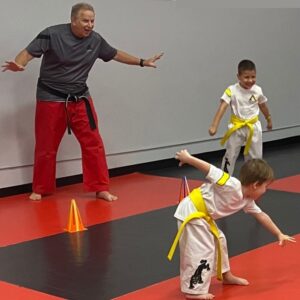
One of our most effective tools was something we called the Mocking Game.
The rules were explained the exact same way every time:
“Let’s play the mocking game. You will say what I say and do what I do. BUT! You won’t always do what I say or say what I do. Confused? You won’t be! When you make a mistake, I will tell you to sit. The last one standing is the winner.”
Then two more rules:
When I say “GO,” the game starts, so the next time I use the “G” word, the game has begun.
When I say “STOP,” you must freeze and stop mocking or sit out the next round.
We practiced drills first. Simple, isolated movements.
“Feet wide,” jump out wide.
“Left block,” step and block.
Students would say the movement aloud while performing it in a voice I could hear. Step by step. Call and response.
Once I felt they had gotten enough repetitions in, I would begin adding complications. I might say one thing and demonstrate another. Or change tempo unexpectedly. Or pause mid-command.
When a student followed the wrong cue, missed the freeze, or reacted automatically instead of thinking, they would sit out until the end of that round.
The room would collapse in laughter as students caught themselves making mistakes.
Within minutes, the group would shrink from twenty to one.
That last student became the leader of the next round.
What looked like a simple elimination game was tiered progression in action.
We began with isolated movements (Tier 1).
Then linked movements together in sequence (Tier 2).
Then integrated the full skill under distraction (Tier 3).
In some classes, students were practicing all three tiers while simultaneously rehearsing belt-required challenges.
What looked like a game was actually:
- Isolated skill repetition
• Sequencing under instruction
• Inhibitory control (not reacting automatically)
• Auditory processing and working memory
• Voice projection and confidence building
• Micro-assessment under cognitive load
• Leadership rotation
• Emotional regulation after failure
The Mocking Game wasn’t played every day. It was one of several structured tools used to reinforce skill while building executive control.
Fun isn’t distraction. Fun is structure wearing a smile.
Scaling Energy by Age Without Losing Structure
Energy shifts with age.
I referred earlier to the Pee Wees as jumping beans — explosive, spontaneous, constantly in motion. They respond to rhythm and ritual. External structure regulates them quickly.
Adolescents (6–11) carry about 25% less chaos energy than the Pee Wee class, they can handle layered instructions and partner drills. Complexity becomes motivating.
Teens are different.
I liken teens to a 1920s truck with a hand crank. On a cold morning, that engine doesn’t start easily. It takes effort to get it moving. Their energy isn’t explosive, it’s dormant.
For them, we used partner warm-ups and synchronized drills to ignite engagement. If you direct teenage energy into a common goal, it transforms into momentum, focus, and shared purpose.
One of our most effective tools was the partner rotation drill.
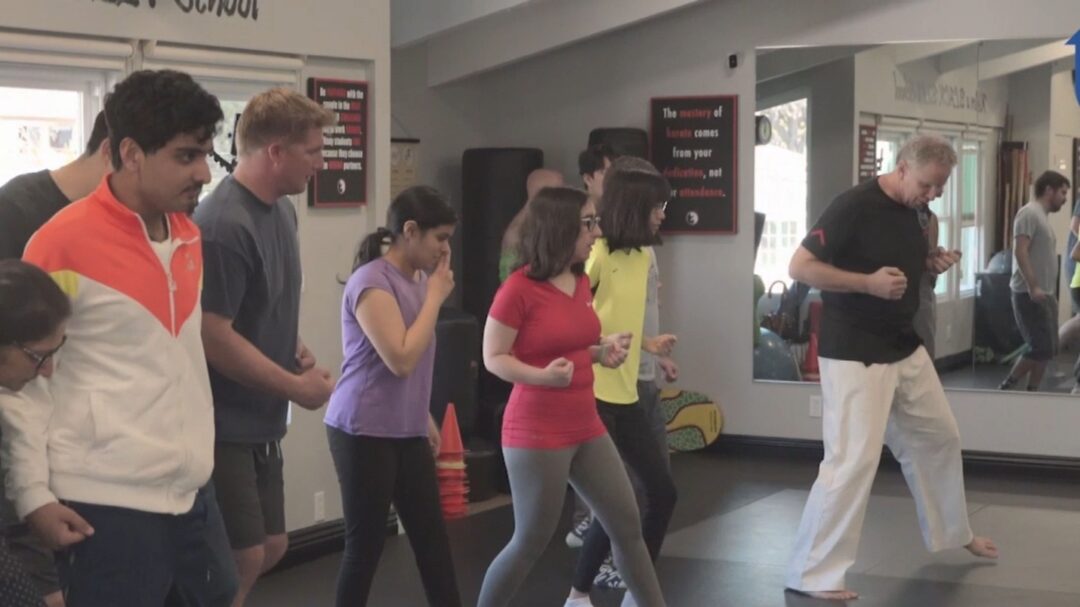
Imagine eleven students. Two lines of five facing each other. One student standing centered in front. When I say “Rotate,” everyone moves one space to their right. The middle student moves into the right line. The front student from the left line moves to the middle and in the back of the line the person moves from the right line to the left. At each rotation, the partner across from you changes and as the rotation progresses each student will occupy every position.
Drill.
“Rotate.”
Shift.
Drill again.
As the class advanced, I added complications to the rotation to keep it sharp. When someone missed their move, we laughed briefly and reset.
The structure stayed intact, but the variation kept it alive.
What that drill built wasn’t just coordination. It built:
- Spatial awareness
- Social adaptability
- Transition fluidity
- Comfort with small mistakes
- Leadership
Adults (17 and up) often arrive with more built-in focus then that teens class we discussed. Their engines are idling. But structure still matters. Clear cues reduce hesitation. Confident leadership reduces uncertainty.
The structure doesn’t change. The ignition method does.
Authority Without Aggression
In community centers or environments without established culture, authority is not assumed. It must be established.
Not through volume.
Not through intimidation.
Through clarity and confidence.
Confidence in your posture, tone, and consistency.
Structured movement requires calm authority. It is not loud dominance. It is clear direction.
I was invited many times to work with at-risk youth groups in Las Vegas — community centers, alternative programs, even light detention settings. These teens were not chaotic. They were guarded.
Participation carried social risk. No one wanted to be the first to look foolish.
Before introducing drills, I would address the room by talking about words like confidence, discipline, and self-control. But while I was speaking, I was also observing. Every group has informal leaders, usually more than one, that the student’s glance toward before deciding how to react.
Instead of engaging the entire group at once, I focused on one or two of those influencers first. If you didn’t know better, you would assume I asked a random student a random question.
Here’s the sequence:
- Ask a genuine question.
- Affirm the response publicly.
- Turn to the group: “Is that right?”
If you’ve identified the right influencer, the room will confirm it without resistance.
Then pause and watch the shift.
Once rapport is established through repeating this dialog, invite the influencer to assist with the first drill.
That simple sequence changes the dynamic. The moment an informal leader participates, the room recalibrates. What felt risky now feels permitted. Movement begins without force.
This isn’t manipulation. It’s alignment.
In Judo, you don’t meet force with force. You move with it, then redirect it. Classrooms work the same way.
You’re not overpowering the social structure; you’re working with it.
And once the engine starts, structured movement takes over.
Practical Takeaway for Teachers
When introducing a new fitness or movement routine in a reluctant group:
- Identify who others watch.
- Engage them respectfully.
- Give them ownership.
- Let participation cascade.
You don’t need to be the loudest person in the room. You need to be the clearest.
Transition Breakers Save the Day
One of the biggest mistakes in group settings is ignoring transitions. As a teacher, you already understand how to signal attention, establish expectations, and move a room from one task to the next. The shift into structured movement is no different; it simply requires the same intentional framing.
The moment you move from seated academic work into physical activity is where most teachers feel tension. Not because movement is disruptive but because the entry into movement is unpredictable.
Coordinated movement increases oxygen flow. It activates attention systems. It interrupts mental fatigue. Done correctly, it recalibrates the room.
But if the transition into that drill is chaotic, the reset effect is lost to distraction.
Structure protects the reset.
Some classes will need to clear space.
Some may shift to one side of the room.
Others can stand right beside their desks.
There are as many transition formats as there are environments. The key is deciding in advance what “ready” looks like for your group.
Here’s a simple example to train the entry:
“Okay everyone, freeze. Three deep breaths. Eyes forward. Then stand in ready position.”
The first few times, it feels mechanical. By the tenth repetition, it becomes automatic. Eventually, it becomes culture.
Once that culture is in place, you can move from reading to a physical activity drill — and back again — without friction. And that drill becomes a cognitive ignition switch.
Think of it like clearing cache on a computer or turning the ignition on that 1920s truck.
You didn’t just add movement. You engineered a reset.
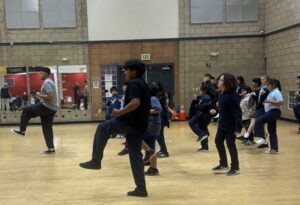 From Compliance to Buy-In
The language used during transitions and movement matters. It determines whether students feel managed or invited in. For instance, discipline isn’t a personality trait. It’s a practiced behavior.
When I say, “That’s discipline,” I’m not labeling a student — I’m naming the action they just performed. They froze when it was hard. They rotated when confused. They reset after laughing. That’s discipline in motion.
When students understand discipline as something they practice — not something they either possess or lack — resistance drops.
It becomes trainable.
And when language reinforces effort instead of identity, buy-in replaces compliance.
Measuring Real Success
Success is not:
- Perfect silence
- Perfect lines
- Zero movement
Success is:
- Faster reset time
- Quicker response to cues
- Students correcting themselves
- Reduced recovery time after escalation
- Anticipation of routine
- Physical activity as a part of daily routine
When a room begins regulating itself, structure has taken root.
Closing
Structured movement is not about controlling people.
It’s about directing energy.
Creating safety.
Building adaptability.
Designing transitions before you need them.
But there’s something even more powerful than structure.
When I first began training in martial arts, karate schools had rigid standards and clear etiquette. But what struck me wasn’t the rules — it was who enforced them.
It wasn’t the instructor.
I would arrive fifteen or twenty minutes early, trying not to stand out, sitting at the back of the mat. A senior student once approached me and said, “If you’re on the mat, you should be practicing or stretching.”
No lecture.
No authority badge.
Just culture.
Years later, I found myself saying the same thing to a new student. Not because anyone told me to. Not because it gave me power. But because it was simply how things were done.
That’s directed energy.
My instructor didn’t need to constantly explain the rules. The structure was so consistent that it became culture. And culture carried the standard.
I spent years trying to recreate that in my own studios. What I learned is this:
Structure creates culture — but only when it’s consistent, clear, and repeatable.
That’s the goal of structured movement.
Not control.
Not compliance.
Culture.
And when culture takes hold, the room begins to regulate itself.
Movement doesn’t create chaos. Absence of structure does.